

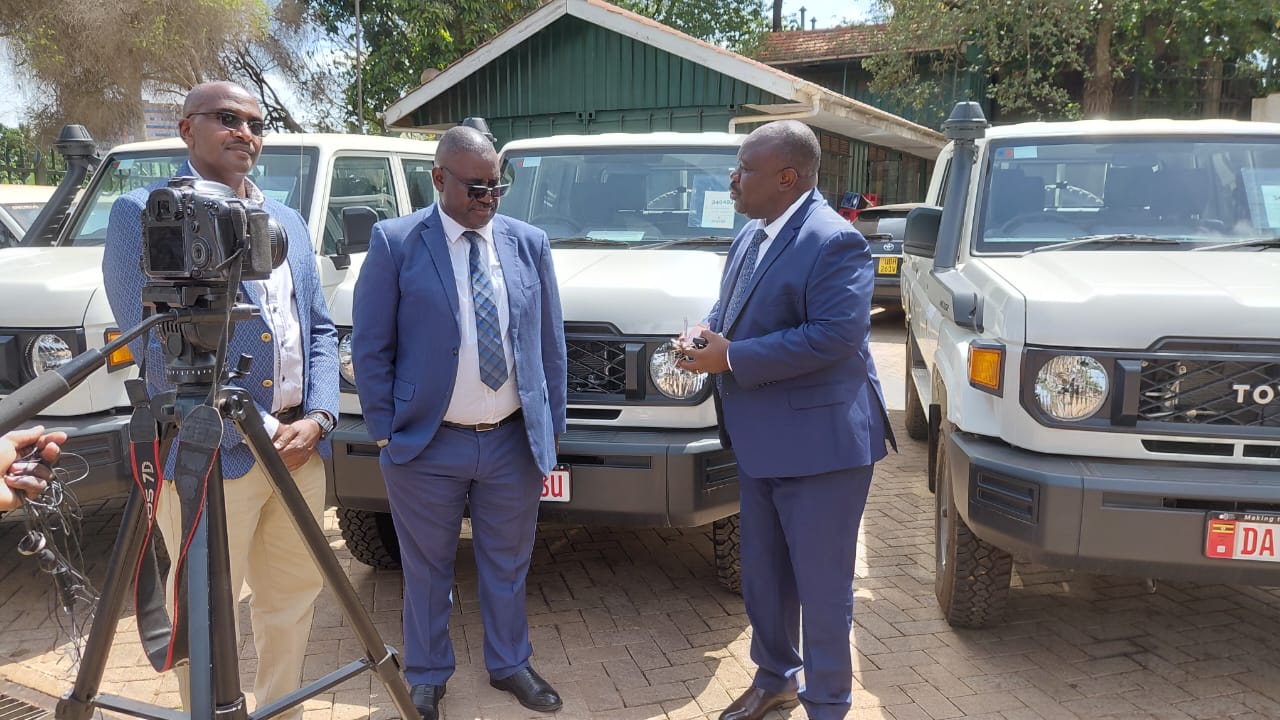
The Uganda Wildlife Authority (UWA) has received a boost to its field operations following the handover of three Land Cruiser vehicles from the Greater Virunga Transboundary Collaboration.
The vehicles were officially handed over by the collaboration’s Executive Secretary, Dr. Andrew Sseguya, to UWA Executive Director, Dr James Musinguzi, in a move aimed at strengthening One Health surveillance and response capacity across key protected areas in Uganda.
According to Dr. Musinguzi, the support comes at a critical time when the need for integrated health monitoring systems is growing, particularly in conservation areas where human, wildlife, and environmental interactions are frequent.
He noted that the vehicles will significantly improve the authority’s ability to transport laboratory samples from remote parks to testing facilities, enabling faster detection and response to zoonotic disease threats.
He added that the vehicles will also enhance community engagement, especially in hard-to-reach areas surrounding protected zones.
These communities often serve as the first point of contact in identifying unusual animal or human health patterns, making their involvement vital in early warning systems.
The initiative is part of a broader One Health approach that recognizes the interconnectedness of human, animal, and ecosystem health.
By strengthening surveillance and response mechanisms at field level, the partnership aims to reduce the risk of disease outbreaks while promoting sustainable conservation practices.
Dr. Sseguya emphasized that the donation reflects the Greater Virunga Transboundary Collaboration’s continued commitment to supporting member states—Uganda, Rwanda, and the Democratic Republic of Congo—in addressing shared challenges across the Virunga landscape. These include wildlife conservation, ecosystem management, and cross-border disease control.
The addition of the vehicles is expected to improve mobility for field teams, strengthen coordination among stakeholders, and enhance rapid response capabilities in Uganda’s protected areas, ultimately contributing to both biodiversity conservation and public health protection.